 Fulfilled
One Column Page
and responsive to boot
The Parable of the Sower
by T. J. Smith
This article appeared in the 2026 Summer issue of Fulfilled! Magazine
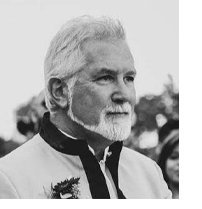
Greetings! Big announcement: I just released a companion book to “The Last Semite.” This one is called “How to Be an Antizionist and Still Like Jews.” This book gives new information on the Rothschilds, the early start of the Balfour Declaration, and how the Ashkenaz Khazarian-converted Jews had already begun infiltrating other countries’ governments with Zionism before the declaration was even fully accepted and rubber-stamped by President Woodrow Wilson. It’s an informative little read and at least worth the cost of the ink and paper (www.tjsmithministries.com).
Let’s continue from the last issue by digging deeper into the parables from the Gospel of Mark.
The Sower
Mark 4:2 “he was teaching them many things in parables, and in his teaching, he said to them:
3 Listen! A sower went out to sow.
4 as he sowed, some seed fell along the path, and the birds came and devoured it.
5 other seed fell on rocky ground, where it did not have much soil, and immediately it sprang up, since it had no depth of soil.
6 and when the sun rose, it was scorched, and since it had no root, it withered away.
7 Other seed fell among thorns, and the thorns grew up and choked it, and it yielded no grain.
8 And other seeds fell into good soil and produced grain, growing up and increasing and yielding thirtyfold and sixtyfold and a hundredfold.
9 And he said, “He who has ears to hear, let him hear.”
10 And when he was alone, those around him with the twelve asked him about the parables.
11 And he said to them, “To you has been given the secret of the kingdom of God, but for those outside everything is in parables,
12 so that ‘they may indeed see but not perceive, and may indeed hear but not understand, lest they should turn and be forgiven.’”
13 And he said to them, “Do you not understand this parable? How then will you understand all the parables?
14 The sower sows the word.
15 And these are the ones along the path, where the word is sown: when they hear, Satan immediately comes and takes
away the word that is sown in them.
16 And these are the ones sown on rocky ground: the ones who, when they hear the word, immediately receive it with joy.
17 And they have no root in themselves, but endure for a while; then, when tribulation or persecution arises on
account of the word, immediately they fall away.
18 And others are the ones sown among thorns. They are those who hear the word,
19 but the cares of the world and the deceitfulness of riches and the desires for other things enter in and choke
the word, and it proves unfruitful.
20 But those that were sown on the good soil are the ones who hear the word and accept it and bear fruit, thirtyfold
and sixtyfold and a hundredfold” (ESV).
Though some Biblical Expositors believe this was Jesus’ first parable,1 Scripture records the earlier one we discussed in the last issue:
And he called them to him and said to them in parables, “how can Satan cast out Satan?"2
Let’s agree that, in Mark, the soils parable is considered the second. In that light, this was the first parable Yeshua spoke, not out of a response to a confrontation with the Jewish leaders, but from His own volition.
There is an interesting phrase that Jesus used in verse 9: “He who has ears to hear, let him hear.” This is an often-overlooked statement by Yeshua that needs to be interpreted using Scripture.
Many times, Jesus quoted Old Testament passages that we aren’t aware of, mainly because our church has failed to teach such things. This is a shortcoming of the Church that needs to be corrected.
Let’s find out how this phrase was used in the Tanakh and why Jesus referenced it. We begin with Moses.
Deuteronomy 29:4 “Yet Jehovah has not given to you a heart to know, and eyes to see, and ears to hear, until this day.”
Moses was exhorting the Israelites that since they had received a covenant (The Ten Commandments) from Yahweh, they could now (in their day) know what God expected. Their eyes could now (from that point on) be open. Of course, the phrases “heart to know, eyes to see, ears to hear” are just figures of speech that mean the Hebrews would have a standard they could attempt to live by.
Moses was explaining how important this (that) day was that marked the new covenant. God had made it clear what His expectations were for His people. This had never been done before. Thus, via the Law, their minds would be able to conceive what would please Him. (Notice there was no guarantee that they would actually be able to fulfill their end of the agreement, just that they would at least know what it would take to please Yahweh.)
Ok, that is what Moses said. Let’s fast forward to the book of Isaiah and read what was written almost 700 years after Moses.
Isaiah 6:9 “And He said, ‘Go and say to this people, hearing you hear, but do not understand; and seeing you see, but do not know.’”
Isaiah 6:10 “Make the heart of this people fat, and make his ears heavy, and shut his eyes, that he not see with his eyes, and hear with his ears, and understand with his heart, and turn back, and one heals him” (Litv).3
Before I show the contradiction between these two writers concerning the same group of people, let’s break this verse down. I placed the word “fat” in bold so that we could look at its meaning and context. Here’s how Albert Barnes’ commentary describes the word “fat.”
Fat - Gross, heavy, dull, stupid. That is, go and proclaim such “truth” to them as shall have this effect - as shall irritate, provoke, and enrage them;
When you consider how the first-century Jews rejected Jesus as Messiah, you really appreciate how this prophecy was fulfilled 800 years after Isaiah wrote it.
Now for the apparent contradiction between Moses and Isaiah, and even Paul. Moses’ encouragement to the Jews in 1500 BC is contrary to Paul telling the same people that they were about to experience a new covenant never before possible. Here is what Paul wrote:
1 Corinthians 2:9 “. . . according as it has been written, ‘Eye has not seen, and ear has not heard,’ nor has it risen up into the heart of man, the things which God has prepared for those that love Him” (Litv).
Let’s look at the three men’s words side-by-side for a better comparison.
Moses: Yet Jehovah has not given to you a heart to know, and eyes to see, and ears to hear, until this day.
Isaiah: “. . . and say to this people, ‘Hearing you hear, but do not understand; and seeing you see, but do not know.’”
Paul: “. . . according as it has been written, ‘Eye has not seen, and ear has not heard,’ nor has it risen up into the heart of man, the things which God has prepared for those that love Him.”
I know . . . I know . . . Just when it was starting to get good, I have to stop and sing the theme song from the Carol Burnett Show: “I’m so glad we had this time together . . .” We will pick this up again, kiddos, and don’t forget to pick up the new book. It’s written more on a high school level than a college level, so even guys will be able to read it! BAM!! Ya’ll be good to each other, and stop arguing so much on Facebook. I’m watching you. Till next time. TJ ♰
1. E.g., Alfred Edersheim, “Life and Times of Jesus Messiah,” p. 586, vol. 1.
2. Mark 3:23
3. Literal Translation of the Holy Bible
Comments:
Your honest review will help others in their search for truth. If you must leave a negative review please be gracious.
Rather, speaking the truth in love, we are to grow up in every way into him who the head, into Christ . . . .
(Ephesians 4:15)
We use "Disqus" commenting software. If you are not familiar with "Disqus," click here for more information. You don't need a Disqus account to post comments, however, without an account you won't be notified if someone responds to your post.