 Fulfilled
One Column Page
and responsive to boot
Overcoming Life's Challenges: Victory Through Faith
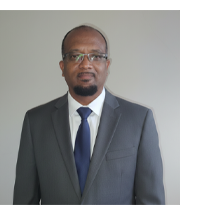
by Maurice Rogers
This article appeared in the 2026 Fall issue of Fulfilled! Magazine
Every generation has faced its own unique challenges. Some have endured wars, economic collapse, political upheaval, or devastating disease. Others have wrestled with loneliness, broken relationships, uncertainty about the future, or the quiet burdens that remain hidden behind smiling faces. While the circumstances may differ, the human experience remains remarkably consistent. Every person encounters obstacles that test courage, challenge faith, and raise difficult questions about God's presence and purpose.
For the Christian, however, life’s challenges are not merely problems to endure; rather, they are opportunities to discover what it truly means to live in the kingdom of Christ. The fulfilled gospel does not promise a life free from adversity. Instead, it promises something far greater: the assurance that no trial, however severe, can ultimately rob God's children of an already won victory.
This truth is captured beautifully in John’s first epistle (the English Standard Version [ESV] is used here and throughout this study):
“For everyone who has been born of God overcomes the world. And this is the victory that has overcome the world – our faith. Who is it that overcomes the world except the one who believes that Jesus is the Son of God?” (1 John 5:4-5).
John’s words are striking in their certainty. He does not suggest that believers might overcome if their faith is strong enough or their circumstances favorable enough. Nor does he reserve victory for a select group of exceptionally mature Christians. His statement is wonderfully inclusive: everyone who has been born of God overcomes the world. It’s a spiritual law.
That principle immediately raises an important question. If Christians are overcomers, why do they still experience pain, disappointment, temptation, and loss?
The answer lies in understanding how Scripture defines victory. Our culture usually measures success by material ease and comfort. We celebrate those who accumulate wealth, achieve influence, or avoid hardship. God's kingdom measures victory differently. In Scripture, overcoming is not escaping life’s difficulties but remaining faithful to Christ in the midst of them. Jesus Himself demonstrated this perfectly. He was misunderstood by His own family, rejected by many of His people, betrayed by a close friend, falsely accused, and crucified by the governing authorities. Yet, through unwavering obedience to His Father and His purpose, what appeared to be defeat became the greatest victory in history.
The Christian life follows that same pattern. Victory is not found in a trouble-free existence but in learning to trust God so completely that external circumstances no longer determine the mood in your internal kingdom. The storms may continue to rage, but the believer discovers an internal peace that many cannot fathom.
This perspective transforms the way we view every challenge. Rather than asking, “How can I escape this difficulty?” we begin asking, “How is God inviting me to grow through it?” We learn to measure ‘success’ by increased faithfulness, deeper peace, and greater conformity to Christ and His kingdom principles.
Overcoming, therefore, begins in a place many believers overlook: the kingdom within.
The Kingdom Within
“But the saints of the Most High shall receive the kingdom and possess the kingdom forever, forever and ever.” (Dan 7:18).
When people think about God’s Kingdom, they often picture something external – a future heaven, the Church, or Christ’s reign over all creation. While these realities are certainly true, Jesus repeatedly taught that God's Kingdom also has a deeply personal dimension – “for, behold, the kingdom of God is within you” (Luke 17:21). Christ’s reign is manifested throughout the world by being first established within the hearts of His people.
Each believer possesses what might be called an inner kingdom. It is composed of the mind, the heart, the will, the emotions, the imagination, and the conscience. This is the realm in which decisions are made, values are formed, attitudes take root, and character is shaped. It is here that every spiritual battle is first won or lost.
This understanding changes the way we think about overcoming. Many Christians devote enormous energy trying to gain control over their external world. They wish difficult people would change, unfavorable circumstances would improve, or persistent problems would simply disappear. And, if you are a futurist, you may wish to be raptured out of your adverse situation. Scripture, however, consistently directs our attention to something even more important: the condition of the heart.
No earthly ruler can govern a nation effectively while chaos reigns within its own borders. History repeatedly demonstrates that kingdoms often collapse, not because of foreign invasions, but because corruption and disorder have already taken hold internally. The same principle applies spiritually. Before we can exercise a Christlike influence upon the world around us, Christ must first establish His government within us.
This is why Proverbs urges believers to “guard your heart, for everything you do flows from it.” Every word we speak, every decision we make, every relationship we nurture, and every response we offer to life’s challenges springs from the condition of this inner kingdom.
If anxiety governs the heart, anxiety will shape our decisions. If pride occupies the throne, pride will influence our relationships. If anxiety dominates our thinking, peace becomes impossible to sustain. External victories cannot compensate for internal disorder.
God therefore begins His transforming work where it matters most – not by changing our surroundings first, but by changing the ruler of our hearts.
Christ the King and the Believer’s Calling
The Bible opens with humanity receiving a remarkable responsibility. The covenant couple was entrusted with dominion over God’s kingdom. Their authority, however, was never intended to be independent. They were God’s governing ambassadors, representing Him throughout the earth.
Sin shattered that relationship, and the consequences echoed through every generation until Christ came to repair that wound. The gospel announces that this broken relationship has been restored through Jesus Christ. He is also our rightful King, and more than that, He graciously invites His people to share in His reign – not as autonomous rulers, but as faithful co-regents exercising authority under His lordship.
This astonishing promise appears in Christ’s words to the church in Revelation:
“The one overcoming, I will give to him to sit with Me on My throne, as I also overcame and sat down with My Father on his throne.” (Rev 3:21).
This is not so much a promise as a statement of fact. Once we are sons of God, it is in our DNA to overcome. And once we set our minds to overcome, we begin reigning with Christ over our internal kingdom, learning to order every part of our lives according to His example.
No longer are God’s people slaves wandering in the wilderness of covenant transition, but we as sons of God have come to the kingdom at such a time when it has been established in the promised land obtained by Christ. As slaves, God’s people were not allowed to reign, but as sons, we have been given this tremendous privilege.
Every kingdom has a throne, and every throne has a ruler. The internal kingdom is no different. Every day, something occupies the place of highest authority in our lives. Sometimes it is Christ. At other times, anxiety quietly assumes control. Pride may seize the throne through self-sufficiency. Anxiety may issue its anxious decrees. Anger may demand swift retaliation.
The Christian life is, in many ways, the daily practice of patterning our kingdom reign after Christ’s principles.
The Daily Coronation
This is not accomplished through a single dramatic spiritual experience but through countless ordinary decisions made every day. Each morning presents a fresh opportunity to acknowledge Christ’s lordship. Will we trust His promises more than our anxieties? Will we choose forgiveness instead of resentment? Will we carry out His policy even when it is costly? Will we rest in His sovereignty rather than react according to the flesh?
These seemingly ordinary choices are, in reality, acts of royal allegiance. They determine who governs our internal kingdom.
As believers repeatedly order their thoughts, desires, and ambitions according to Christ’s Kingdom principles, something remarkable begins to happen. Inner stability gradually replaces emotional chaos. Confidence begins to replace insecurity. Peace grows stronger than panic. The King is not merely acknowledged in theory; His rule becomes increasingly evident in everyday life.
This brings us to one of the greatest paradoxes of God's Kingdom: those who truly reign are those who have first learned to rest.
Ruling from Rest
At first glance, the idea of ruling from a place of rest seems almost contradictory. The world teaches that leadership requires relentless effort, constant vigilance, and unending striving. Success, we are told, belongs to those who push harder, work longer, and carry every burden on their own shoulders.
God’s Kingdom offers a profoundly different picture.
The greatest King who ever lived was never driven by panic or controlled by circumstances. Throughout His earthly ministry, Jesus moved with remarkable calm. Crowds pressed around Him, opponents plotted against him, and urgent needs surrounded Him wherever He went. Yet He was never hurried by the demands of the moment. He withdrew regularly to commune with His Father, spoke only what the Father gave Him to speak, and acted only in accordance with the Father’s will. His life was marked by purposeful activity flowing from perfect rest.
This was not passivity; it was complete confidence in His Father’s sovereign care.
The same principle lies at the heart of the Christian life. Spiritual rest is not inactivity, nor is it an excuse for complacency. Rather, it is the settled assurance that God is faithful, His purposes cannot be thwarted, and His presence is sufficient for every challenge we face. From that place of confidence, believers are free to act courageously without being driven by anxiety.
Few biblical figures illustrate this better than Joshua.
For forty years, Joshua had faithfully served under Moses, watching God deliver Israel from Egypt, sustain them in the wilderness, and renew His covenant promises. Then, almost without warning, everything changed.
“Moses My servant is dead.” (Josh 1:2).
With those simple words, one era ended, and another began.
The responsibility that now rested upon the shoulders of Joshua – Moses’ successor – was overwhelming. He was expected to lead an entire nation across the Jordan River into a land occupied by powerful enemies. The people he was called to shepherd had a long history of anxiety, rebellion, and discouragement. Humanly speaking, the task seemed impossible.
It is significant, therefore, that God’s first response was not to provide Joshua with military strategies, political advice, or detailed logistical plans. Instead, God reminded him of something far more important – His own unchanging presence.
“Moses my servant is dead. Now therefore arise, go over this Jordan, you and all this people, into the land that I am giving to them, to the people of Israel. Every place that the sole of your foot will tread upon I have given to you, just as I promised to Moses... No man shall be able to stand before you all the days of your life. Just as I was with Moses, so I will be with you. I will not leave you or forsake you. Be strong and courageous...” (Josh 1:2–6)
Notice how God’s encouragement unfolds. Before Joshua is told what he must do, he is reminded of God’s faithfulness and what God has already accomplished. Before he is commanded to be courageous, he is assured that he will never stand alone. His courage is rooted, not in confidence in himself, but in confidence in God.
We who believe in the fulfilled gospel recognize the typology of this moment. Jesus, whose name was literally Joshua, was Moses’ antitypical successor. On the mount of transfiguration where Moses (the Law) and Elijah (the prophets) appeared, God pointed the disciples to the antitypical Joshua and proclaimed, “This is my beloved Son with whom I am well pleased; listen to him” (Matt 17:5).
As the physical land that Joshua trod was given to him, so all things in heaven and earth have been given to Jesus. We are reminded by the apostle of what God has already accomplished through, for, and by Christ:
“The eyes of your understanding being enlightened; that you may know what is the hope of his calling, and what the
riches of the glory of his inheritance in the saints,
And what is the exceeding greatness of his power to us-ward who believe, according to the working of his mighty power,
Which he worked in Christ, when he raised him from the dead, and set him at his own right hand in the heavenly places,
Far above all principality, and power, and might, and dominion, and every name that is named, not only in this world, but also in that which is to come:
And has put all things under his feet, and gave him to be the head over all things to the church, Which is his body, the fullness of him that fills
all in all” (Eph 1:18-23).
Christ reigns over all things; so, we no longer need to manufacture self-certainty, because our confidence rests in the One who has already conquered all His enemies. We can move forward boldly even when the path ahead is unclear because we know that the One who calls us also walks beside us.
This is what it means to rule from rest.
It is the quiet confidence that allows a believer to face uncertainty without despair, opposition without bitterness, and delay without losing hope. It is not the absence of adversity but the presence of Christ that produces this kind of stability.
Such rest also transforms the way we interpret adversity.
Most people instinctively view obstacles as interruptions to their plans. We pray for open doors, smooth paths, and immediate solutions. When difficulties arise, our first question is often, “Why is this happening to me?”
Scripture gently redirects that question.
Rather than seeing every hardship as an obstacle to God’s purposes, the believer begins to recognize that many trials are instruments in God’s hands. They are not evidence of His absence but opportunities for His transforming work.
A delay may teach patience that success never could.
A disappointment may expose misplaced hopes and redirect our trust toward Christ.
A season of waiting may cultivate humility, perseverance, and deeper dependence upon God.
Even painful failures can become classrooms in which grace is more fully understood.
None of this suggests that suffering is pleasant or that Christians should pretend that pain does not hurt. The Bible never minimizes grief. Jesus Himself wept at the tomb of Lazarus, even though He knew His resurrection was only moments away. Faith does not deny reality; it sees reality through the lens of God’s greater purposes.
This shift in perspective changes the questions we ask.
Instead of asking only, “How can I get out of this?” we begin asking, “Lord, what are You teaching me through this?”
That simple change marks the difference between merely enduring life’s trials and allowing God to use them for spiritual growth.
Over time, we discover that every challenge presents an opportunity to strengthen the kingdom within. Each difficulty exposes attitudes, desires, and habits that either align with Christ’s Kingdom or rebel against it. In this sense, life’s trials become faithful messengers, revealing the true condition of our hearts.
The pressures of life do not create our character; they reveal it.
When anxiety surfaces, it reveals where trust still needs to grow. When anger erupts, it uncovers wounds that require healing. When anxiety dominates our thoughts, it exposes places where we have not yet fully rested in God's care. Every trial becomes an invitation for deeper allegiance to Christ and His kingdom principles.
Let’s remember that we are not here waiting to be evacuated; we are here to fill the earth with Christ’s glory. Everywhere that we tread in His name will be given to us, but we must persevere in order to overcome. ♰
Comments:
Your honest review will help others in their search for truth. If you must leave a negative review please be gracious.
Rather, speaking the truth in love, we are to grow up in every way into him who the head, into Christ . . . .
(Ephesians 4:15)
We use "Disqus" commenting software. If you are not familiar with "Disqus," click here for more information. You don't need a Disqus account to post comments, however, without an account you won't be notified if someone responds to your post.